


She drinks two litres of water every day without fail. She has cut out alcohol, reduced coffee, and carries a reusable bottle as a matter of discipline. And yet, every morning, the same result: skin that feels tight before she has even washed her face, a dull, slightly papery texture across her cheeks, and fine lines that no amount of water seems to soften. Sound familiar? The relationship between hydration and skin health is real — but it is not the simple, linear equation the wellness industry has spent years selling. Water matters. But the route from glass to glowing skin is far more complex, and for most people experiencing dry or dehydrated skin, the problem is not the water bottle. It is the biology happening between your last sip and your skin’s surface.
What Skin Hydration Actually Means — and Where It Comes From
There is an important distinction that rarely gets made clearly: systemic hydration and cutaneous hydration are not the same thing. Systemic hydration refers to the overall water content of the body — managed by your kidneys, regulated by hormones, and distributed across organs and tissues according to physiological priority. Cutaneous hydration — the kind you can actually see and feel — refers specifically to water content within the stratum corneum, the outermost layer of the skin.
The stratum corneum is not simply the top of the skin. It is a highly organised structure of flattened cells embedded in a lipid matrix — often described as a “brick and mortar” arrangement — and it functions as the body’s primary barrier against water loss and environmental damage. Its hydration is maintained not by a constant supply of water from underneath, but by a network of molecules collectively called Natural Moisturising Factors (NMFs): amino acids, urocanic acid, pyrrolidone carboxylic acid, and other hygroscopic compounds that draw water from the environment and hold it within the skin cells themselves.
When ingested water is absorbed in the gut, it enters systemic circulation and is distributed to organs according to metabolic demand — the skin ranks relatively low in that hierarchy. According to research on water intake and skin hydration outcomes, increasing water consumption in individuals who are already adequately hydrated produces no statistically significant improvement in stratum corneum hydration. The skin’s surface moisture is governed primarily by barrier function — not by volume of intake.
Think of the stratum corneum as a sophisticated sponge pre-loaded with its own water-binding compounds. The question is not how much water you pour over it from the inside — it is whether the sponge’s structure is intact enough to hold what is already there.
The Barrier Problem: Why a Leaky Skin Barrier Defeats Any Amount of Water
It is worth pausing here on a distinction that is often glossed over: dry skin and dehydrated skin are different biological conditions, with different causes and different solutions. Dry skin is a type — characterised by chronically low sebum production. Dehydrated skin is a state — a deficit of water content in the stratum corneum that can affect any skin type, including oily skin. Both, however, are shaped far more by barrier function than by water intake.
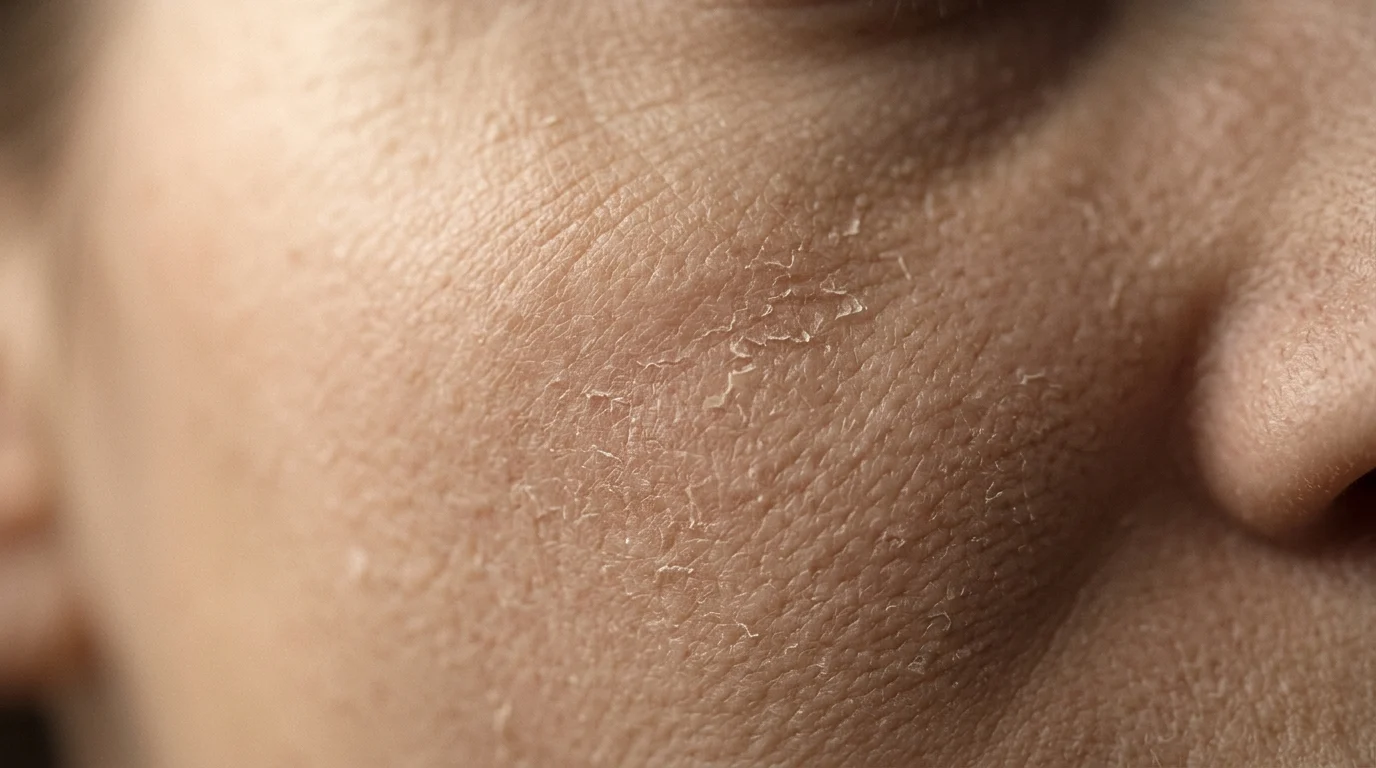
The stratum corneum retains water not because water is being continuously pumped up from the dermis, but because a precise mixture of barrier lipids — ceramides, free fatty acids, and cholesterol — fills the spaces between skin cells and physically prevents water from evaporating out through the surface. This process is known as transepidermal water loss (TEWL): the passive diffusion of water through the skin and into the surrounding air.
In healthy, intact skin, TEWL is minimal. In compromised skin — from over-exfoliation, harsh cleansers, low humidity, aging, or inflammatory conditions — the lipid matrix is disrupted and TEWL increases. The skin dries not from lack of water supply, but from a structural inability to retain the water it already has. According to research on transepidermal water loss and skin barrier lipids, ceramide depletion is closely associated with elevated TEWL and visibly compromised skin moisture levels — regardless of systemic hydration status.
Consider a bucket with a hole in it: filling it faster does not solve the problem. The issue is structural. Drinking more water when your barrier is compromised is the equivalent of pouring water into that leaking bucket — well-intentioned, but missing the point. The repair needs to happen at the barrier level: ceramide-rich formulations, gentle cleansing, and how a minimal, barrier-focused skincare routine supports skin moisture retention are likely to produce far more meaningful results than adjusting fluid intake.
Key barrier-disrupting factors that elevate TEWL:
- Frequent use of foaming or sulphate-based cleansers
- Over-exfoliation with acids or physical scrubs
- Low ambient humidity (air conditioning, central heating)
- Prolonged UV exposure without protection
- Age-related decline in ceramide synthesis
- Inflammatory skin conditions (eczema, psoriasis, rosacea)
- Chronic stress and elevated cortisol
How Much Water Do You Actually Need? What European Health Guidelines Say
The “eight glasses a day” rule has no rigorous scientific basis. It persists not because of clinical evidence but because of its satisfying simplicity. The actual guidance is more nuanced. The European Food Safety Authority and the European Commission’s health knowledge gateway provide European health guidelines on daily water intake that set adequate intake at approximately 2.0 litres per day for women and 2.5 litres for men — from all sources, including food. These are thresholds for systemic health: kidney function, cognitive performance, cardiovascular regulation, and thermoregulation.
What they are not is a skin prescription. Meeting these thresholds is necessary for baseline organ function, and falling significantly below them will eventually manifest in the skin — dullness, reduced elasticity, and a drawn appearance can signal genuine clinical dehydration. But in a person who is already meeting their hydration baseline, consuming additional water produces no measurable improvement in skin surface moisture. The skin’s hydration ceiling, for a normally hydrated individual, is set by barrier competence — not by extra intake.
Clinical dehydration and cosmetic skin dryness are distinct conditions. Conflating them is one of the wellness industry’s most persistent and commercially convenient errors.
Aquaporins: Your Skin’s Own Water Channel System
Skin cells contain specialised protein channels called aquaporins — microscopic gateways that regulate the movement of water molecules across cell membranes. Aquaporin-3 (AQP3), the most studied variant in skin biology, sits within the epidermis and helps maintain water and glycerol levels in the outer layers. Think of these channels as an internal irrigation system: what determines their efficiency is the condition of the channels themselves, not simply how much water is available upstream.
According to research on aquaporins and skin hydration regulation, AQP3 expression appears to be influenced by UV radiation, hormonal shifts — particularly the estrogen decline that accompanies menopause — and the aging process, all of which tend to reduce aquaporin density over time. Topically applied glycerin and hyaluronic acid have shown potential to interact with and support aquaporin function at the skin surface. What current evidence does not suggest is that daily water glass count has any meaningful effect on how well these channels function in an already adequately hydrated person.
Factors that influence aquaporin activity in skin:
- Cumulative UV damage (downregulates AQP3 expression)
- Estrogen levels (menopause-related decline reduces AQP3)
- Aging (progressive reduction in aquaporin density)
- Topical glycerin and hyaluronic acid application
- Certain inflammatory cytokines associated with barrier disruption
The Internal Factors That Actually Influence Skin Hydration
If plain water intake has limited direct impact on skin surface hydration in well-nourished adults, what internal factors are worth paying attention to? Diet and gut health appear to matter considerably more — not as vague wellness concepts, but through specific, identifiable biological pathways.
Omega-3 fatty acids — from oily fish, flaxseed, and walnuts — are precursors to the lipids the skin uses to construct and maintain its barrier. A diet deficient in essential fatty acids produces a measurably compromised barrier, elevated TEWL, and rough, dry skin texture. Antioxidants from vegetables, fruits, and polyphenol-rich foods reduce oxidative stress that degrades barrier lipids and collagen structure. And gut microbiome diversity, increasingly understood through the emerging field of the gut-skin axis, modulates systemic inflammation — inflammation that, when chronic, directly impairs barrier function and skin hydration. According to research on diet and skin hydration and aging, dietary patterns rich in vegetables, fish, and plant-based fats are significantly associated with better skin moisture retention and reduced signs of skin aging.
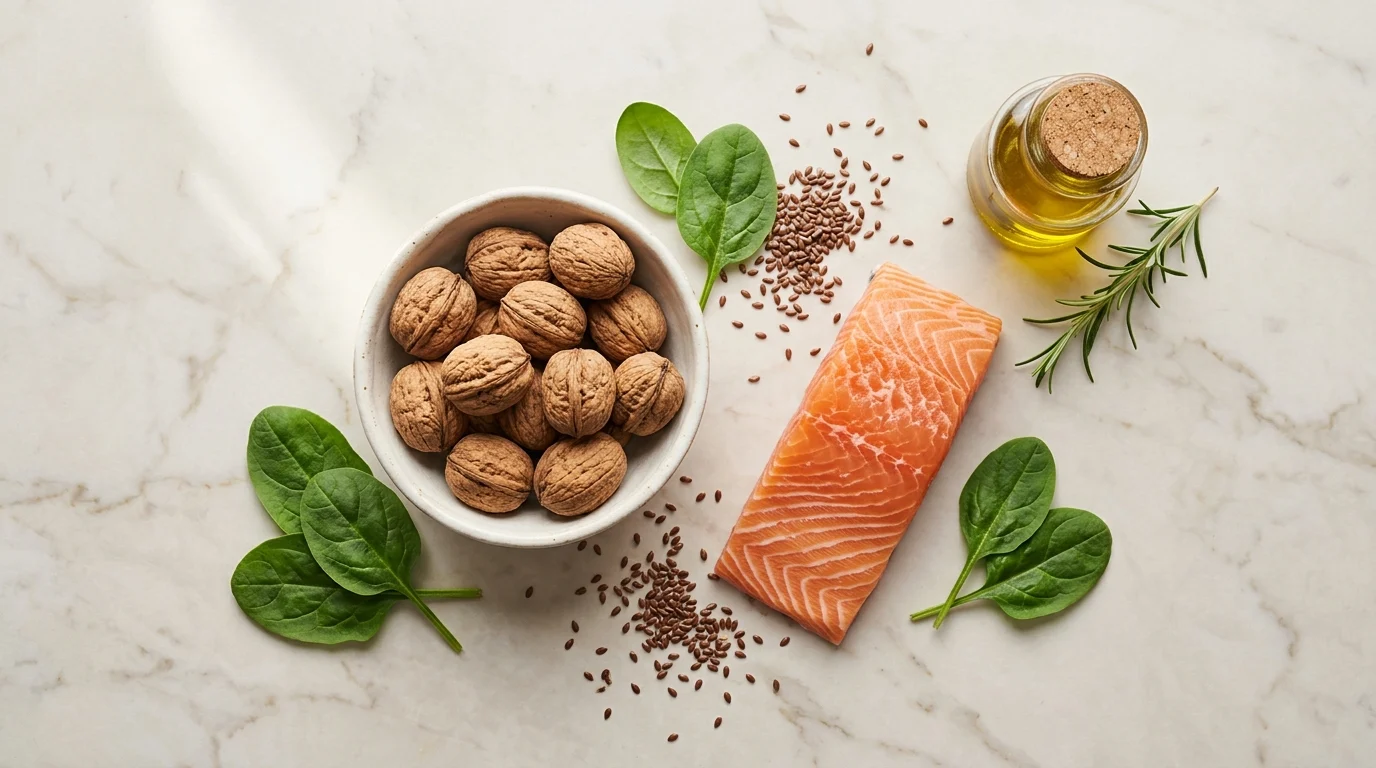
Understanding how gut health influences skin hydration and barrier function reframes the conversation entirely: the internal route to skin moisture runs through what you eat, not just what you drink. Similarly, how circulation from regular movement supports skin nutrient delivery demonstrates that even basic lifestyle habits create measurable differences in how efficiently nutrients — including those barrier-building fatty acids — reach the skin.
Dietary factors with documented skin hydration benefits:
- Omega-3 fatty acids (barrier lipid synthesis and anti-inflammatory action)
- Vitamin C (collagen synthesis and antioxidant barrier protection)
- Vitamin E (lipid-soluble antioxidant, integrates into barrier structure)
- Polyphenols (reduce oxidative degradation of barrier components)
- Fermented foods and probiotics (support microbiome diversity and reduce systemic inflammation)
- Zinc (wound repair and barrier enzyme function)
Sleep and Circadian Rhythm: The Nocturnal Hydration Window Your Skin Depends On

One of the less-discussed aspects of skin hydration is that it is, in part, a time-dependent biological event. The skin does not maintain its barrier passively and continuously — it actively repairs and rebuilds it, and it appears to do so on a schedule. Research into circadian biology suggests that barrier lipid synthesis, ceramide production, NMF replenishment, and the regulation of TEWL all follow a circadian rhythm — with peak activity occurring during the late evening and nighttime hours.
According to research on sleep and skin barrier repair, disrupted sleep and circadian misalignment measurably impair the skin’s nocturnal repair cycle, leading to elevated TEWL, reduced barrier competence, and diminished skin hydration levels — even in individuals whose daytime skincare routines are otherwise exemplary. This is why chronically poor sleepers often present with persistently dull, dry skin regardless of product use: the repair window their skin depends on is being closed before the work is done.
Understanding how circadian rhythm shapes your skin’s hydration cycle reframes sleep as something more than rest — it is a nightly maintenance window the skin genuinely depends on. Protecting that window is as much a skincare decision as any product choice. The connection between magnesium, sleep quality, and skin repair is an area of growing interest for exactly this reason — operating well beneath the surface of a typical skincare conversation.
Breathing, Stress, and the Overlooked Hydration Factors
Cortisol — the body’s primary stress hormone — has a well-documented effect on skin barrier function. Elevated cortisol appears to suppress barrier lipid synthesis, accelerate TEWL, and increase skin sensitivity and inflammatory reactivity. Chronic psychological stress is associated with measurably impaired barrier competence and reduced skin hydration — a connection that is physiological, not metaphorical.
For a culture accustomed to addressing skin concerns through products, this is worth sitting with: managing the stress response is, in its own quiet way, a skincare intervention. Breathwork practices that activate the parasympathetic nervous system may reduce cortisol output and, by extension, support barrier integrity. How breathwork reduces cortisol and supports skin barrier health is increasingly discussed in this context — not as wellness performance, but as a physiological mechanism. Similarly, why slow beauty practices support long-term skin hydration finds its grounding less in philosophy and more in the cumulative biology of stress and its effects on barrier integrity over time.
What Actually Improves Skin Hydration: A Practical Summary
What current research points toward, consistently, is that skin hydration is a multifactorial outcome — shaped primarily by barrier function, biological repair cycles, and cellular water-channel efficiency rather than by daily water intake in already hydrated individuals. The interventions with the strongest evidence-based support are:
- Ceramide and fatty acid-rich moisturisers applied to damp skin — they seal water in and directly repair the structural barrier, reducing TEWL
- Humectants: hyaluronic acid and glycerin — topically applied, these draw water into the upper skin layers and interact with aquaporin channels at the surface
- Barrier-supportive diet: omega-3 fatty acids, antioxidant-rich vegetables, fermented foods, and polyphenol sources all support barrier lipid synthesis and gut-skin health
- Consistent, quality sleep — protecting the nocturnal window in which ceramide synthesis and NMF replenishment occur
- Stress regulation — reducing cortisol load through breathwork, movement, and parasympathetic nervous system activation to prevent cortisol-driven barrier disruption
- Avoiding barrier aggressors: harsh cleansers, over-exfoliation, unprotected UV exposure, and extreme temperature environments
- Adequate systemic hydration as an essential baseline — genuine clinical dehydration will manifest in the skin, and meeting daily intake guidelines is non-negotiable for overall health — but exceeding that baseline produces no additional skin benefit in healthy adults
If skin dehydration is persistent despite barrier-supportive skincare and lifestyle adjustments, consult a dermatologist — chronic dehydration, eczema, and other barrier conditions sometimes require clinical assessment rather than routine product changes.
Myth, corrected: The belief that drinking more water directly produces visibly better skin is one of the most persistent misconceptions in beauty culture — and one of the least supported by clinical evidence. In individuals who are already meeting their hydration baseline, additional water consumption does not measurably increase stratum corneum moisture levels. Dry, tight, flaking, or dull-looking skin in an otherwise healthy person is almost always a barrier competence problem — a ceramide deficit, a TEWL issue, an aquaporin efficiency question — rather than a water deficiency. The glass of water has a role. It is one part of a much larger picture — and rarely the part that needs attention.
FAQs
Does drinking more water actually make skin look better?
Only if you were clinically dehydrated to begin with. In an already adequately hydrated person, increased water intake produces no measurable improvement in skin surface moisture or appearance. Skin hydration is governed by barrier function — ceramides, lipids, and NMFs — not by the volume of water consumed above the clinical baseline.
What is the difference between dehydrated skin and dry skin?
Dry skin is a skin type — a condition of chronically low sebum production that leaves skin structurally prone to barrier compromise. Dehydrated skin is a temporary state of insufficient water content in the stratum corneum, which can affect any skin type including oily skin. Dehydrated skin typically presents as tight, dull, and prone to fine surface lines; it responds to humectants and barrier repair. Dry skin requires ongoing lipid replenishment. The two frequently co-exist but have distinct causes and solutions.
Which skincare ingredients genuinely improve skin hydration?
Among the most evidence-supported are: ceramides, which research indicates help rebuild barrier lipid structure and reduce TEWL; hyaluronic acid, a humectant that draws water into the upper skin layers and appears to interact with aquaporin channels at the surface; glycerin, similarly hygroscopic and well-studied for its aquaporin-related activity; niacinamide, which is generally considered to support ceramide synthesis and broader barrier reinforcement; and fatty acids including linoleic acid, which serve as structural building blocks in barrier lipid repair. These ingredients operate at the level of the stratum corneum — where skin hydration is actually regulated — which is why, for most people with persistently dry or dehydrated skin, topical formulation choices tend to produce more measurable change than adjustments to drinking habits.