


Picture this. A woman spends £120 on a serum. The packaging is immaculate — a sleek, minimalist bottle embossed with the name of a “proprietary peptide complex.” The brand’s website, its press coverage, its Instagram grid: all of it centres this complex as the product’s defining claim. She scans the INCI list. The peptide appears at position 29 out of 35 ingredients, nestled between two preservatives, well below the 1% threshold where ingredient ordering becomes arbitrary and any further ranking is at the manufacturer’s discretion. At that position, the peptide is at a relatively low concentration — though without a published percentage, the exact amount is unknowable from the label alone. What is knowable is this: the lower an ingredient appears in the sub-1% section, the less the INCI list can be used to argue it is present in a clinically meaningful dose. The marketing said peptides. The formula, read carefully, raised questions. This is the precise point where ingredient transparency skincare stops being a philosophical preference and becomes a practical consumer protection issue. The gap between what a brand communicates and what its formula actually contains often reflects marketing positioning rather than formulation priorities — and that gap is where most of the beauty industry’s credibility problems live. It is exactly the gap that a new generation of niche beauty brands is choosing to close — making skincare ingredient transparency not merely an ethical position, but a genuine competitive advantage.
What Ingredient Transparency in Skincare Actually Means
The INCI System: The Language Behind Every Skincare Label
Before evaluating any skincare brand’s honesty, it helps to understand the foundational system that makes transparency possible. The International Nomenclature of Cosmetic Ingredients — INCI — is the standardised global naming convention used to identify cosmetic ingredients on product labels. Think of it as a universal food labelling system for cosmetics: the same ingredient always carries the same INCI name, regardless of which brand uses it, what proprietary name they assign it, or where the product is sold. The INCI system overview and its role in cosmetic ingredient transparency, as explained by the Personal Care Products Council, illustrates how this universal naming convention eliminates brand-imposed ambiguity — at least in theory.
The INCI list operates on one critical structural rule: ingredients must appear in descending order of concentration. The ingredient present in the greatest amount is listed first; the ingredient present in the smallest amount appears last. This makes the INCI list the most reliable document available for assessing what a formula actually prioritises — and how to read skincare ingredients meaningfully. A moisturiser that lists water (Aqua), glycerin, and shea butter (Butyrospermum Parkii) in the first three positions is telling you, in chemical shorthand, that those three ingredients form the functional backbone of the formula.
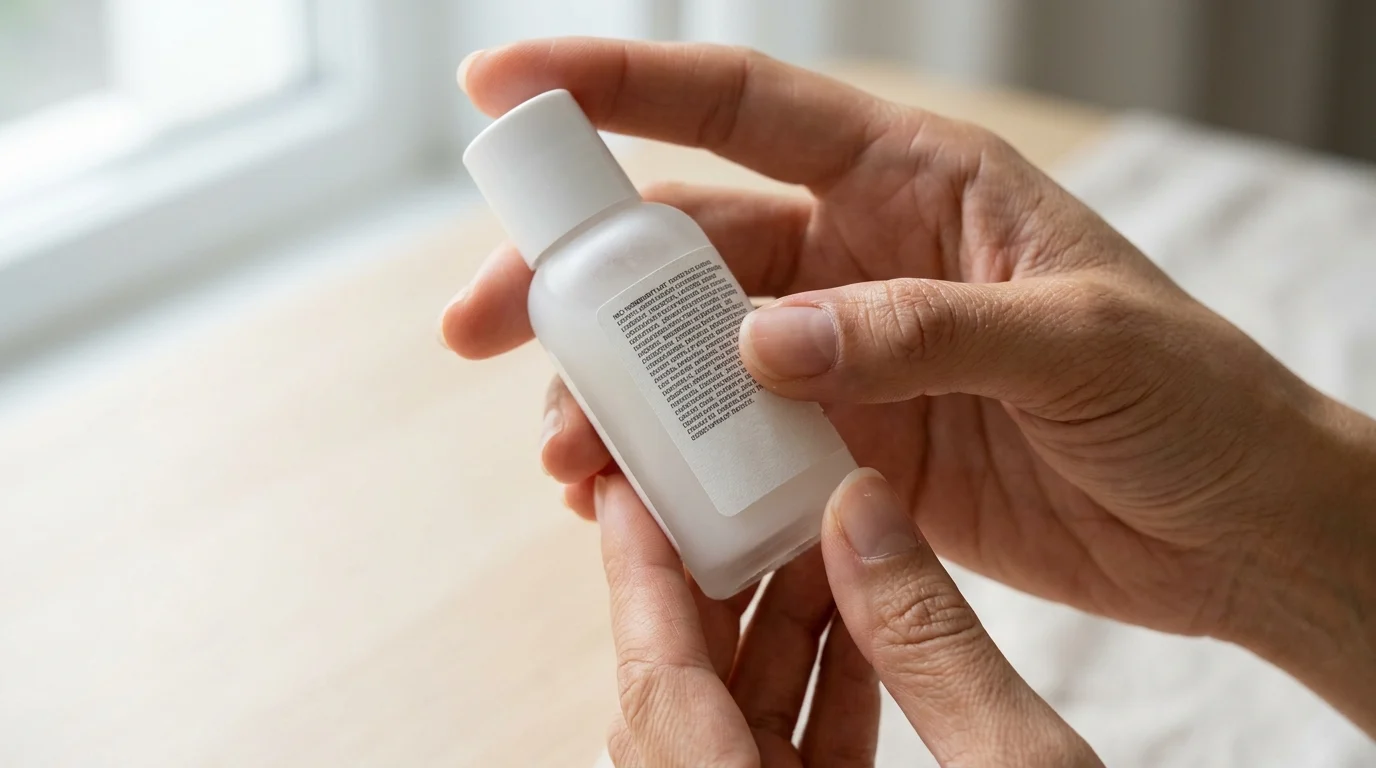
Most consumers never look at the INCI list. They read the front of the pack. This is exactly where the credibility problem begins.
What Brands Are — and Are Not — Required to Disclose
In the United States, the FDA mandates that cosmetic products display ingredient lists in descending order of predominance. Crucially, however, any ingredient present at 1% or less may appear in any order below that threshold. As the FDA summary of cosmetic labeling requirements and ingredient disclosure rules confirms, US law requires ingredient disclosure — but does not require brands to publish exact concentrations. This creates a structural problem. A brand is entirely legally compliant by listing a hero active anywhere in the sub-1% section of the INCI list. The consumer cannot determine, from the label alone, whether that active is present at 0.9% — potentially functional for certain actives — or at 0.001%, which is cosmetic window dressing.
The European standard is more rigorous. EU Cosmetic Products Regulation 1223/2009, as outlined by Cosmetics Europe, establishes ingredient transparency requirements that include mandatory complete INCI labelling, a prohibited and restricted ingredient list, mandatory pre-market safety assessment, and a designated responsible person accountable for product compliance. EU-regulated products must carry a complete, legally accurate INCI list — this is enforceable, not optional. The EU standard represents the most useful minimum baseline for evaluating skincare ingredient disclosure: any brand clearing this bar has met a meaningful threshold of regulatory accountability. But even EU compliance does not require concentration disclosure. That step remains voluntary — which is exactly why it has become the defining differentiator of genuinely transparent skincare brands committed to going beyond minimum skincare ingredient disclosure requirements.
The Gap Between Marketing Claims and Formula Reality
Proprietary Complexes and Trademarked Names
A “proprietary complex” is, at its most basic, a marketing construct. It is a branded — often trademarked — name that refers to one or more ingredients already present on the INCI list. The complex name grants perceived exclusivity and makes direct comparison shopping between brands considerably more difficult. It does not change what is in the formula. Calling flour, sugar, and eggs “The Golden Blend™” does not alter their proportions or their function. It simply makes it harder for a consumer to evaluate them objectively.
When a proprietary complex name appears prominently on packaging, the first move for an ingredient-literate reader is to locate its constituent ingredients on the INCI list — and note their positions. A trademarked peptide complex whose actual peptide ingredients appear at positions 28, 31, and 34 of a 35-ingredient formula is communicating something very specific about concentration. The INCI list skincare disclosure makes this readable, if the consumer knows what to look for. The proprietary name is designed to prevent that reading.
Brands use proprietary complex naming for rational competitive reasons: it creates the perception of a unique, irreplaceable formula. But for any consumer trying to understand what is in my skincare and whether it genuinely performs, a trademarked name on the front of the pack should function as a prompt — not a reassurance.
Concentration Theater: When Actives Are Listed But Not Dosed
“Concentration theater” is the practice of including a clinically recognised active ingredient at a concentration too low to produce the results implied by the marketing — purely to legitimise a label claim. It is pervasive, and it is entirely legal under current cosmetic ingredient regulation in both the US and EU frameworks.
Dermatological literature offers reference concentration ranges for commonly studied actives — ranges that represent the doses used in published clinical trials rather than universal guarantees of efficacy. It is worth noting that effective concentration depends on ingredient form, the surrounding formulation, and the delivery system used. Vitamin C is a useful illustration: L-ascorbic acid, the most extensively studied form, has been assessed at 10–20% in stability-optimised, low-pH formulations — but other derivatives such as ascorbyl glucoside or sodium ascorbyl phosphate are used at different concentrations and work via different mechanisms. Similarly, niacinamide at 2–5% has shown sebum-regulatory and barrier-support effects in multiple peer-reviewed studies; hyaluronic acid at 0.1–2% is associated with surface hydration benefits; retinol has been studied at ranges from 0.025% to 1% depending on skin tolerance and intended outcome. These figures are reference points, not fixed rules. What they do provide is a starting framework: when any of these actives appears in the lower quarter of a 40-ingredient INCI list — well behind multiple emollients, fillers, and preservatives — it is reasonable to question whether it reaches the concentrations studied in the clinical evidence cited to support its claims.
Spotting concentration theater in skincare label claims requires attention to three signals:
- The hero active appears in the bottom third of a long INCI list
- No percentage is disclosed anywhere on the pack or brand communications
- Marketing copy uses “contains [active]” language rather than “formulated with X% [active]”
The presence of an ingredient does not guarantee its efficacy. Dose determines effect. This is first-year pharmacology, and it applies to cosmetic actives without exception.
Why Ingredient Transparency Skincare Is Niche Beauty’s Structural Advantage
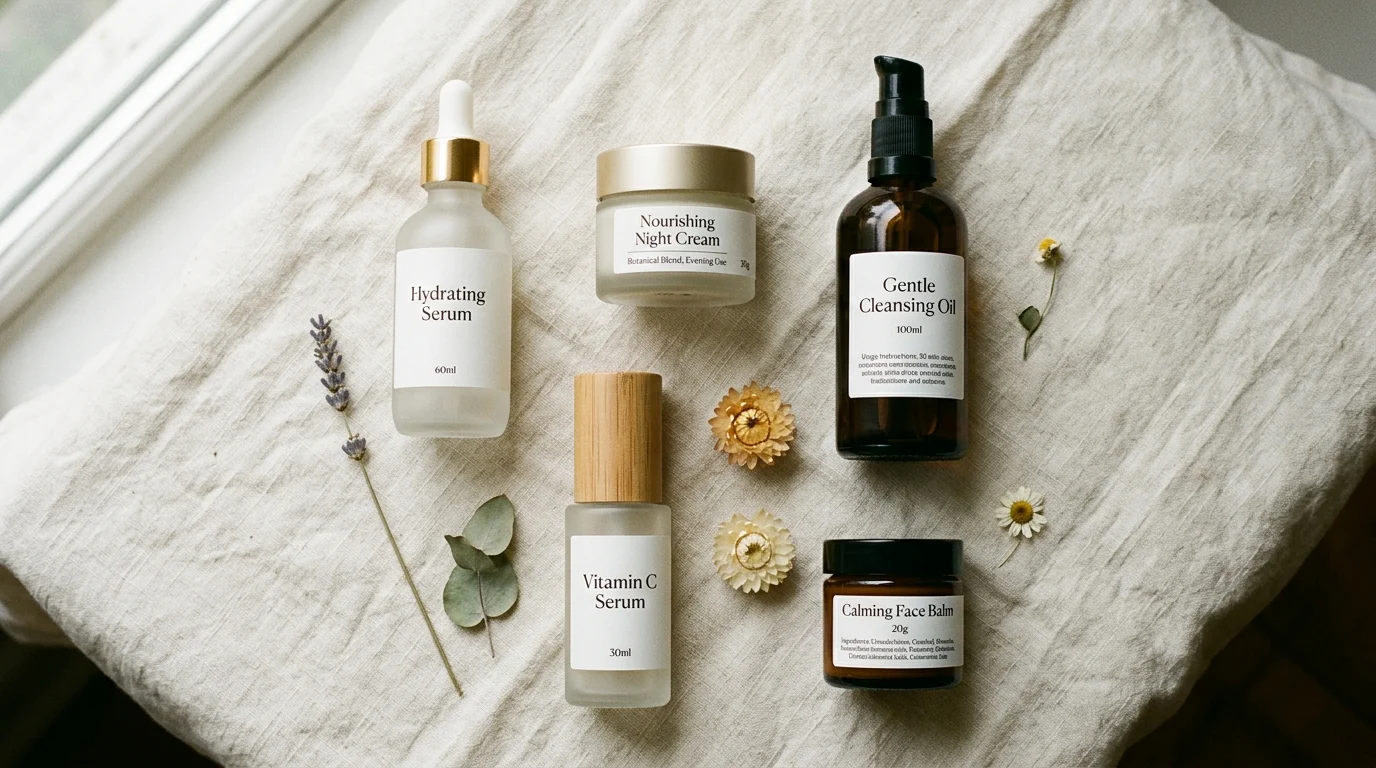
What Niche Brands Do Differently
The most credible niche skincare brands treat transparency as a competitive differentiator — not a compliance obligation. Publishing exact active concentrations, explaining formulation decisions in brand content, disclosing sourcing philosophy, and refusing to use proprietary naming for ingredients already listed on the INCI: these are all voluntary choices. Brands making these choices are signalling something specific: confidence in the quality and integrity of their formula. They are inviting scrutiny rather than deflecting it.
Niche beauty transparency in practice looks like this:
- Published active ingredient concentrations stated clearly — for example, “formulated with 5% niacinamide” or “10% vitamin C”
- Formulation rationale communicated in brand content: why this active, at this concentration, for this outcome
- No proprietary complex naming applied to single ingredients or simple combinations already visible on the INCI list
- Sourcing information for key actives — origin, processing method, supplier transparency
- Packaging choices explained in terms of active stability (e.g., opaque bottles for vitamin C, airless pumps for retinol)
- Clear distinction between functional actives and supporting ingredients such as emollients, humectants, and preservatives
This level of formulation transparency niche skincare requires a brand to have genuine confidence in what it has made. That confidence is itself a quality signal.
Why Larger Brands Resist Full Transparency
The resistance to concentration disclosure from large luxury and mass-market brands is structurally rational, even if it is commercially convenient. Once a formula’s exact concentrations are known, a competitor with a good formulation team can replicate the core structure. This represents real competitive intelligence risk for brands whose primary asset is their formula IP rather than, say, a manufacturing process or a proprietary active source.
There is a second, more uncomfortable reason. Full transparency makes it difficult to defend a premium price point if the formula does not differ materially from lower-priced alternatives. The reliance on proprietary complex mystique, heritage branding, and skincare label claims grounded in marketing language rather than chemistry is partly what sustains the pricing architecture of prestige beauty. This is not inherently dishonest — it is a known feature of luxury goods markets. But it creates an information asymmetry that indie beauty ingredient disclosure practices are beginning to dismantle. And for consumers who have moved past aspirational purchasing into evidence-based skincare, that asymmetry is no longer invisible.
Four Niche Brands That Demonstrate What Ingredient Transparency Looks Like in Practice
OIO Lab
OIO Lab’s formulation approach centres on biotechnology-derived actives, and what distinguishes the brand from a transparency standpoint is its willingness to explain its ingredient choices rather than simply name them. The brand’s communication connects specific biotechnology-based ingredients to the biological rationale behind their inclusion — a practice that sits well above the industry norm of listing an active and asserting its benefits without elaboration. This does not mean every claim is independently verified, but the habit of explaining formulation decisions rather than obscuring them behind proprietary language is itself a meaningful transparency signal. OIO Lab reviewed for biotech ingredient transparency and formulation communication explores how this approach translates to consumer trust in practice.
Evolve Organic Beauty
For brands making “natural” or “organic” claims, third-party certification is the most credible form of clean beauty transparency available — because it removes the brand’s ability to self-define the terms. Evolve Organic Beauty holds ECOCERT and COSMOS certification, providing independent, audited verification of ingredient origin claims. This directly addresses the transparency gap that unverified “natural” marketing language creates. Evolve Organic Beauty reviewed for certified organic transparency and third-party ingredient verification examines how this certification model operates in practice.
MÁDARA Cosmetics
MÁDARA’s long-standing commitment to Nordic botanical ingredient sourcing — combined with an established track record of EU market compliance and certified organic formulation — positions it as a reliable reference point for skincare ingredient disclosure standards. EU-market presence since the brand’s founding means a full regulatory history of complete, accurate INCI disclosure. MÁDARA Cosmetics reviewed for Nordic botanical ingredient transparency and organic formulation standards details this sourcing and disclosure philosophy.
Typology Paris
Typology may represent the clearest current model of ingredient transparency skincare in the niche space. The brand publishes exact active percentages across a large portion of its core product formulations — not as a selective marketing tool deployed for flagship SKUs, but as a standard communication practice applied broadly across the range. For a consumer evaluating transparent beauty brands, this means being able to compare Typology’s stated concentrations directly against the clinical reference ranges discussed in published dermatological literature, without needing to interpret INCI position or decode proprietary naming. That degree of ingredient transparency in cosmetics remains rare at any price point. Typology Paris reviewed for active ingredient concentration transparency and consumer formula empowerment analyses this model in depth.
How to Evaluate Ingredient Transparency Before Purchasing Any Skincare Product
The following framework applies to any brand, at any price point:
- Read the INCI list, not the front of the pack. The hero ingredient on the packaging is marketing; the INCI list is chemistry. These two documents are not always telling the same story.
- Locate the hero active. In a formula of 20 or more ingredients, where does the key active appear? Top half of the list suggests meaningful concentration; bottom quarter of a long list strongly suggests trace-level inclusion.
- Interrogate proprietary complex claims. If a trademarked name appears on packaging, find its constituent ingredients on the INCI list. What does the complex actually consist of — and where do those ingredients sit in the descending order?
- Check for published concentrations. Does the brand disclose exact percentages? If yes, compare against established clinical thresholds for that active. If no concentration is published, treat hero claims with proportional scepticism.
- Assess third-party verification. ECOCERT, COSMOS, and independently specified dermatologist-test protocols carry more weight than self-reported “clean” or “tested” claims that reference no external standard.
- Evaluate formulation communication quality. Does the brand explain why it chose each key ingredient and at what concentration — or does it rely entirely on trademarked names and proprietary mystique? The quality of formulation communication is itself a transparency signal.
A note on clinical suitability: If evaluating skincare products for a specific skin condition, consulting a dermatologist before purchasing based on ingredient claims alone is advisable — clinical concentrations that are effective for one skin type may not be appropriate for another, and a dermatologist can help match active ingredient selection to your skin’s specific needs.
Myth: Longer ingredient lists signal more sophisticated formulas A long INCI list can indicate genuine formulation complexity and ingredient intentionality. It can also be a vehicle for listing a dozen clinically recognised actives at trace-level concentrations — all of which appear at the bottom of the list — to support marketing claims the formula does not functionally deliver. The position and concentration of actives within the INCI list matters far more than the total ingredient count. A focused, shorter formula with well-dosed actives is almost always more useful than a sprawling list engineered for impressive-sounding marketing copy.
Frequently Asked Questions
How do I know if a skincare brand is being transparent about its ingredients?
Look for three things: published active concentrations stated as percentages, formulation rationale communicated beyond marketing language, and the absence of proprietary complex names that obscure what the INCI list already shows. Honest skincare brands invite ingredient-level scrutiny — they do not deflect it with trademarked terminology.
What does it mean when a brand lists a “proprietary complex” on its packaging?
It means a branded name has been assigned to one or more ingredients already present on the INCI list. The complex name is a marketing construct; it does not add any ingredient that is not individually disclosed on the INCI list. The practical step is to identify the complex’s constituent ingredients on the INCI list and note their position in the descending concentration order. That position tells you what the formula actually prioritises — regardless of what the complex name implies.
Do EU skincare brands have higher ingredient transparency standards than US brands?
In terms of regulatory baseline, yes. EU Cosmetic Products Regulation 1223/2009 requires mandatory INCI labelling, pre-market safety assessment, and a legally accountable responsible person — standards that are more demanding than current US FDA requirements for cosmetics. However, neither framework mandates concentration disclosure. That step remains voluntary in both markets, which is precisely why it has become the defining marker of genuinely transparent skincare brands regardless of geography.